
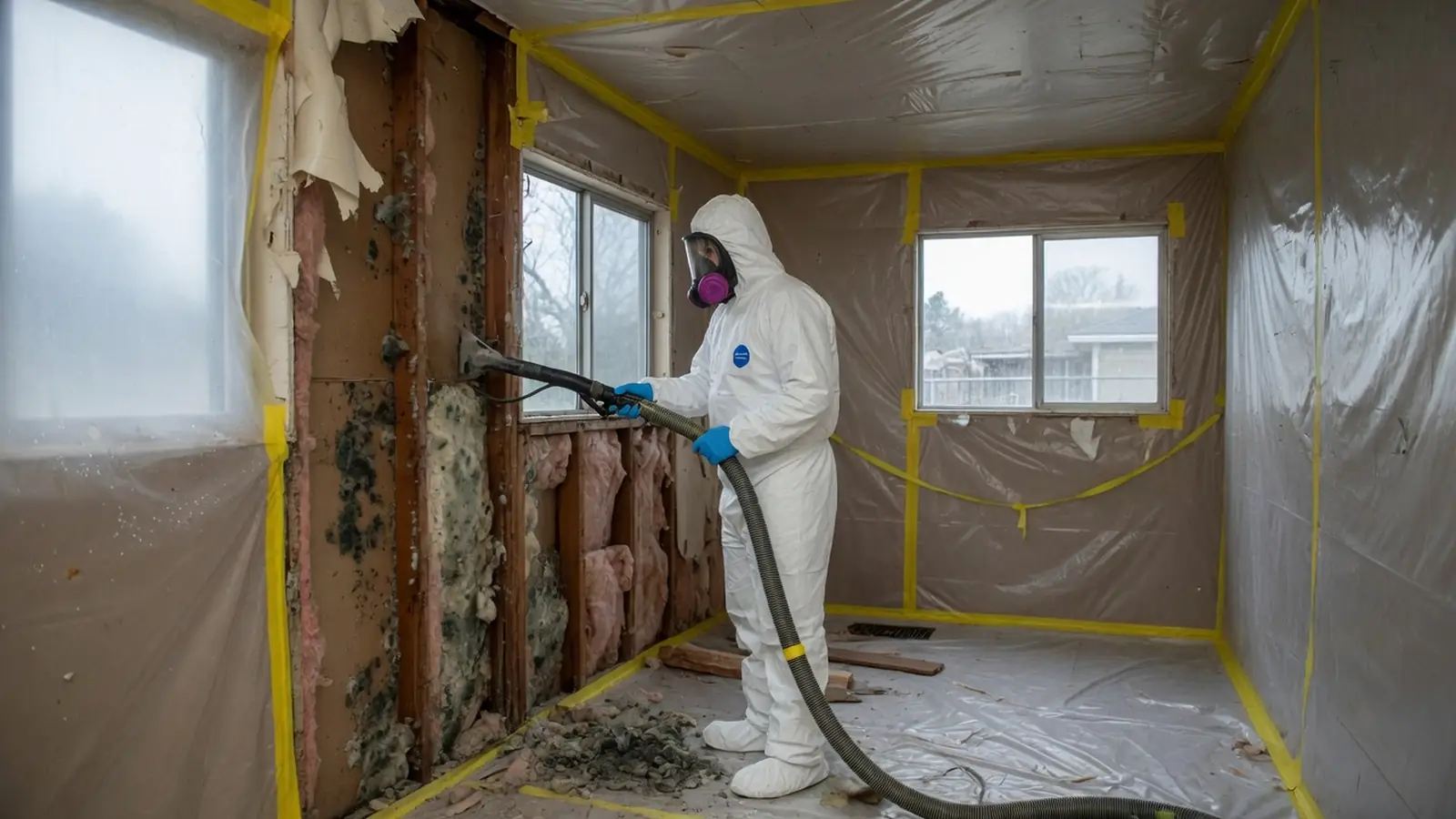
Conroe Mold Remediation
Surfaces can appear dry while underlying framing, subfloors, and baseboards remain saturated; household fans fail to detect or dry structural cavities. Our certified technicians isolate contaminated spaces and extract trapped moisture before colonies spread. Contact our local mitigation specialists to protect your property.
Call (936) 555-0148 for questions.
Prefer to talk? (936) 555-0148
Scientific Containment And Structural Drying
The median owner-occupied home in Conroe, TX was built in 2002 (Census ACS 5-year).
Conroe's humid subtropical climate accelerates mold germination within 24 to 48 hours whenever indoor relative humidity remains above 60 percent following a leak.
Damp structural materials support active mold colonization within 24 to 48 hours unless commercial extraction and drying are deployed.
Homeowners often describe asking how to prioritize gutting waterlogged drywall and carpet removal to halt microbial spread after an unexpected leak.
Our crew delivers certified remediation alongside comprehensive water damage restoration and structural drying services to protect regional properties.
We thoroughly scrub, sanitize, and verify every structural cavity before clearing any containment barrier.
Our Four-Step Remediation Process
Prompt response prevents fungal escalation after plumbing failures or severe weather events. We integrate containment with emergency flood cleanup and rapid water extraction to restore safe living conditions.
- Thermal Inspection And Moisture Mapping. Verified structural drying requires thermal imaging to locate hidden moisture paths and calibrated moisture meters to confirm dry standards. We assess saturated sheetrock, insulation, and framing to establish precise containment boundaries.
- Negative Air Containment. Certified mold remediation isolates contaminated areas using polyethylene sheeting under negative air pressure to stop fungal spores from spreading into unaffected rooms. Continuous HEPA filtration scrubs airborne particulates from circulating spaces.
- Targeted Removal And Substrate Cleaning. Surface spraying with household bleach fails on porous framing timber because water penetrates the wood while chlorine evaporates, leaving fungal roots intact to regrow. Our technicians physically remove non-salvageable materials and apply commercial EPA-registered antimicrobial treatments to structural wood.
- Commercial Dehumidification And Clearance. We deploy industrial LGR dehumidifiers and air movers until relative humidity levels drop below critical thresholds. Delaying professional water mitigation to avoid paying an insurance deductible risks severe secondary damage and costlier long-term reconstruction. Independent clearance verification confirms your living areas are dry and safe.
Our Workmanship Standard And Guarantee
A pattern echoed in public discussions is asking what diagnostic procedures and moisture mapping to expect during a professional inspection. We maintain strict transparent protocols, documenting baseline psychrometric readings and utilizing calibrated instrumentation on every assignment. Whether handling hidden leaks or restoring properties after severe storm damage, our team guarantees containment integrity and complete compliance with industry drying standards.
Attic And Crawl Space Mold Removal
Poor ventilation and roof leaks trap moisture in upper and lower structural spaces. We seal the work zone, remove contaminated insulation, and treat framing lumber with professional antimicrobials to eliminate fungal reservoirs.
Drywall And Subfloor Remediation
Hidden plumbing leaks saturate sheetrock and floor underlayment behind cabinets. We execute clean surgical cuts under negative pressure, discard unsalvageable porous elements, and dry the underlying wood framework to baseline specifications.
HVAC And Air Duct Decontamination
Microbial growth inside air handlers distributes active spores across unaffected living areas. We isolate duct branches, scrub interior surfaces with HEPA-filtered vacuum systems, and treat air systems to restore indoor air quality.
Our Commitment To Verified Structural Remediation
We follow rigorous containment protocols and objective moisture testing standards on every residential remediation project, ensuring contaminated spaces are completely dried and safely restored.
- 11Zip Codes Served
- 6Service Areas
- 3Services Offered
Read honest feedback from regional homeowners who relied on our crew to contain and remove mold contamination after severe water intrusion.
“Our subdivision has rigid rules about visible equipment and service vans parked out front. The crew was exceptionally discreet, keeping negative air exhaust ducts tucked away and staging their gear neatly inside the garage. They addressed every HOA inquiry politely while isolating the work area without disturbing our neighbors.”
Marcus V.
“It has been four months since the remediation wrapped up, and the musty cellar odor has never returned. Even through recent heavy rains and humid weather, the air quality inside remains crisp and fresh. Having verified clearance testing gave our entire household real peace of mind.”
Brenda K.
“My elderly father uses a walker and our rescue dog is terrified of loud noises, so containment was a major concern for us. The crew set up sealed polyethylene barriers that maintained clear, unobstructed walkways and timed the loudest equipment runs around my father's afternoon rest. Their thoughtful precautions made a stressful situation manageable.”
Derek T.
“Another contractor offered a cut-rate quote that merely involved spraying bleach and running a few standard box fans. This team explained why porous framing requires physical removal, negative air pressure, and thermal mapping to stop regrowth at the root. Paying for proper containment and certified remediation saved us from a costly nightmare later.”
Elena S.
Frequently Asked Questions
How quickly can active mold colonize structural materials after an indoor leak?
Active mold colonizes damp drywall and framing lumber within 24 to 48 hours unless commercial water extraction and drying are deployed immediately. Prompt containment and structural dehumidification prevent widespread spore distribution across adjacent living areas.
Why is household bleach ineffective for treating mold on wooden studs?
Bleach fails on porous wood because water penetrates timber while chlorine evaporates, leaving root structures intact to regrow under humid air. Certified mitigation requires physical abrasion or removal paired with deep-penetrating EPA-registered antimicrobials.
How long does a professional residential mold remediation project take?
Typical residential remediation takes one to three days for containment and physical removal, followed by two to three days of structural drying. Total project duration depends on moisture saturation depth and the square footage of affected framing.
What diagnostic tools verify that structural framing is completely dry?
Technicians utilize calibrated moisture meters, penetrating pin probes, and thermal imaging cameras to verify framing meets dry standard targets. Surface dryness alone is misleading because moisture pockets frequently linger inside structural cavities and subflooring.
Is it safe to stay inside the home during the remediation process?
Occupants can safely remain in unaffected areas when the crew establishes sealed polyethylene containment under continuous negative air pressure. For extensive whole-house infestations, temporary relocation during demolition and active scrub cycles may be recommended.