
Conroe Storm Damage
Heavy tropical systems and river basin flash floods can push floodwaters deep into living spaces within hours. Our dedicated response team deploys high-capacity extraction units, targeted structural drying systems, and antimicrobial sanitization to rescue saturated properties. We stabilize damaged residential structures immediately to stop progressive wood rot and widespread microbial spread.
Call (936) 555-0148 if water is flowing now.
Prefer to talk? (936) 555-0148
Professional Storm Water Mitigation
Our team delivers full-service water damage restoration to stabilize compromised properties after severe weather passes through.
Severe neighborhood river floods reach multiple feet indoors, necessitating complete gutting of drywall, insulation, and damaged contents.
Homeowners often describe how wind-punctured roofs lead to disputed insurance claims when hasty DIY tarping allows hidden water damage to spread down through attic framing.
Dense clay soils throughout Montgomery County impede ground absorption, sending heavy storm runoff into low-elevation crawl spaces and slab foundations.
During emergency callouts, technicians map moisture boundaries across base plates using penetrating meters before running commercial desiccant dehumidification systems.
How We Stabilize Storm-Damaged Properties
When rising waters breach living areas, you can schedule immediate residential flood cleanup to stop secondary structural decay.
- Damage Mapping And Virtual Evaluation. Disaster evaluation processes increasingly deploy virtual assessment methods, including aerial flyovers, GPS, and flood modeling, over manual door-to-door sweeps to map damage severity.
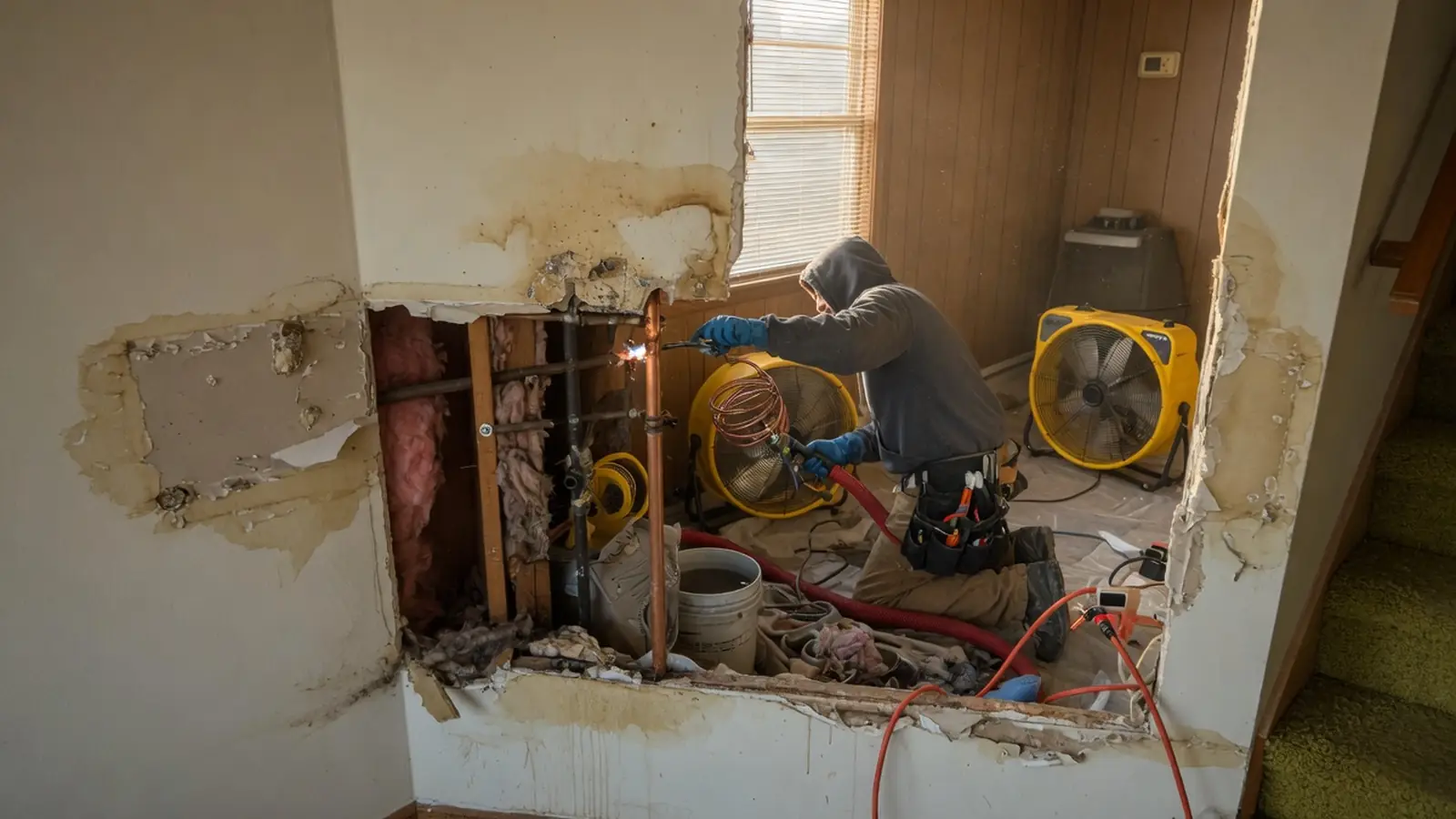
- Flood Cuts And Wet Insulation Removal. Thorough mitigation requires controlled flood cuts and baseboard removal to extract trapped water and discard saturated insulation inside wall cavities.
- Industrial Water Extraction And Structural Drying. Heavy-duty truck-mounted pumps remove standing floodwater before commercial LGR dehumidifiers and high-velocity air movers draw deep moisture out of structural wall studs.
- Antimicrobial Treatment And State Reporting. Flooded property owners must report home damage through the Individual State of Texas Assessment Tool (iSTAT) to trigger localized disaster resources while technicians apply botanical sanitizers.
Our Iron-Clad Restoration Commitment
We maintain an unyielding standard for complete structural drying, never cutting corners by masking odor or sealing damp timber. A pattern echoed in public discussions is that after cleaning surface floodwater, homeowners detect musty odors and blooming mold when trapped moisture stays locked inside subflooring and framing. If trapped moisture lingers behind wall cavities, we coordinate with professional mold remediation specialists to ensure complete air quality clearance. Every project concludes only after calibrated pin meters verify that all structural members meet dry standards.
Emergency Flood Water Extraction
Rapid removal of standing storm floodwater using high-volume extraction equipment prevents deep saturation into subfloors. Technicians clear contaminated water quickly to protect foundational integrity.
Structural Cavity Drying And Flood Cuts
Removing baseboards and executing precise drywall flood cuts allows trapped moisture to vent from wall cavities. Technicians discard soggy insulation to stop microbial colony growth behind surfaces.
Antimicrobial Decontamination And Odor Control
Floodwaters carry outdoor silt and biological contaminants that require hospital-grade botanical disinfectant applications. We treat all exposed framing and masonry to eliminate persistent foul odors and bacteria.
Our Approach To Structural Storm Recovery
Restoring a flooded residence requires immediate technical intervention, strict adherence to national drying standards, and methodical moisture monitoring. Our crews arrive equipped with specialized diagnostic instruments, commercial drying gear, and EPA-registered disinfectants to return damaged properties to safe living conditions without unnecessary delays.
- 10Zip Codes Served
- 6Service Areas
- 3Services Offered
Read genuine feedback from property owners who relied on our emergency mitigation crews to dry, sanitize, and restore their flood-damaged homes.
“Our neighborhood association was anxious about drying equipment noise and disposal bins on the street after the storm. The crew coordinated directly with our board representative, positioned their trailers neatly, and maintained strict daily cleanup. They finished structural extraction quickly without generating a single complaint from adjacent lots.”
Marcus B.
“Six months after floodwaters receded from our ground floor, our indoor humidity remains stable with zero lingering odors. The team monitored the drying curves until the framing registered safe moisture levels before letting anyone rebuild. Having dry wall cavities and spotless subfloors has given us total peace of mind through subsequent rainstorms.”
Elena V.
“Caring for my elderly mother while our hallways were torn up seemed completely overwhelming after the storm. The crew cordoned off safe walking paths, placed HEPA air scrubbers away from her bedroom, and checked in daily about indoor air quality. Their thoughtfulness kept her calm and comfortable during an otherwise stressful cleanout.”
Darren K.
“We initially considered a cheaper contractor who suggested just pulling carpet and running standard household fans. This company explained why thorough mitigation requires controlled flood cuts and commercial dehumidifiers to save the sill plates. Choosing their meticulous protocol prevented hidden structural decay and saved us from massive secondary repairs.”
Patricia N.
Frequently Asked Questions
What should I do immediately after floodwater enters my home?
Shut off main electrical breakers and remove saturated porous items like rugs to halt rapid microbial proliferation across framing. Avoid entering standing water until utilities are confirmed disconnected, and document flood lines with clear photographs before cleanup commences.
Can saturated wall framing and structural studs be salvaged?
Solid wood structural framing can usually be salvaged once wet insulation is discarded and timber moisture content drops below sixteen percent. Industrial dehumidifiers and air movers draw out deep moisture, allowing structural studs to dry thoroughly without requiring structural replacement.
How are flood cuts performed during storm water extraction?
Technicians cut drywall horizontally twelve to twenty-four inches above the water line to ventilate studs and clear wet insulation. Discarding damp wall insulation and opening framing cavities allows dry airflow to reach sill plates and stop mold development behind walls.
How do I report storm flood damage to activate state recovery resources?
Flooded property owners must report home damage through the Individual State of Texas Assessment Tool (iSTAT) to trigger localized disaster resources. Submitting photos and loss details through the official state portal assists emergency management officials in allocating regional recovery funds.
What diagnostic tools verify that structural materials are fully dried?
Restoration teams utilize calibrated pinless moisture meters, thermal imaging cameras, and thermo-hygrometers to map lingering structural dampness. Daily psychrometric readings track drying progress across subfloors and framing until materials reach equilibrium moisture content.