
Conroe Water Damage Restoration TX
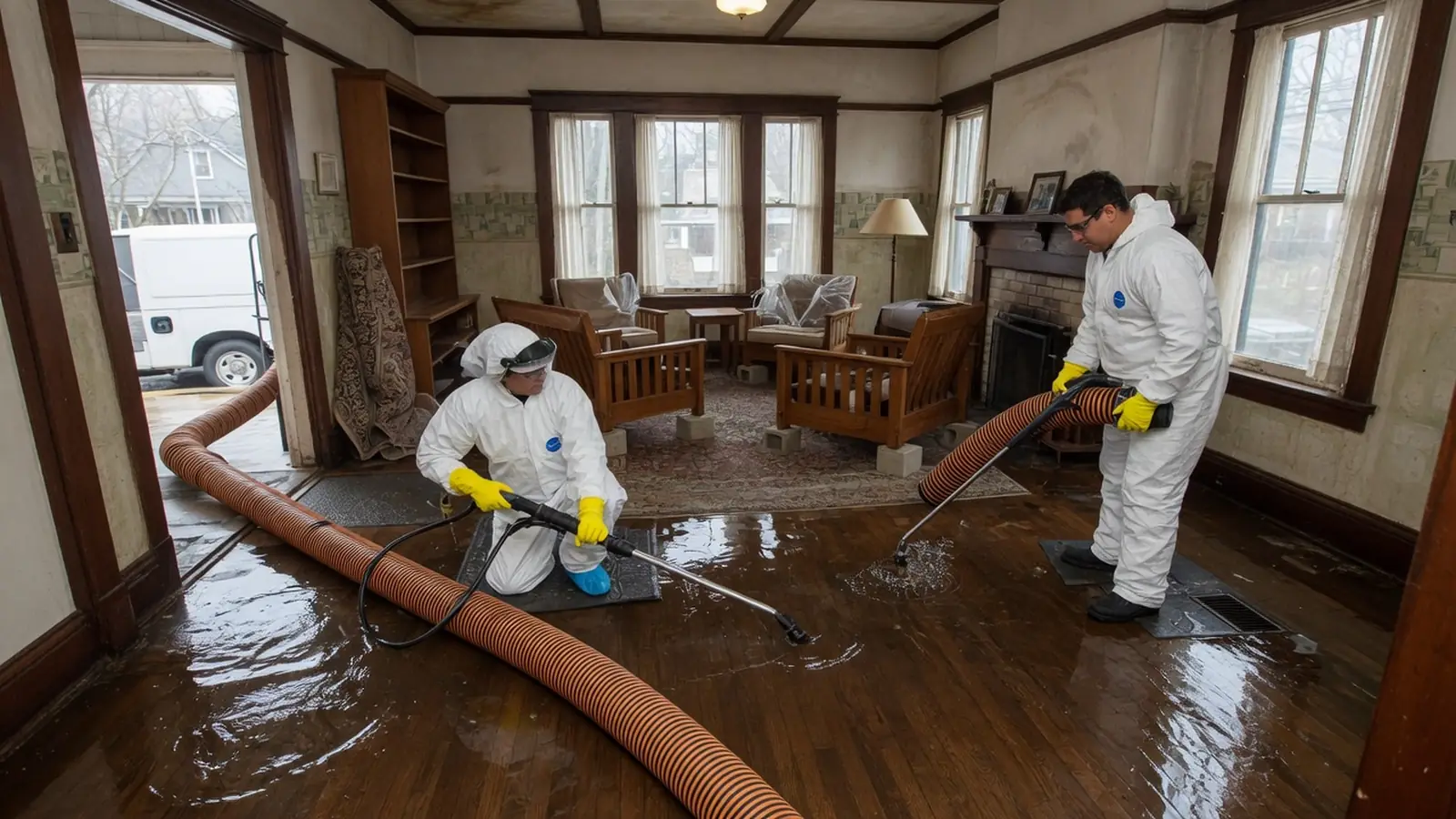
Dense pine tree canopies common across local neighborhoods make homes especially susceptible to roof punctures and sudden water intrusion during severe windstorms. When emergency impact occurs, storm mitigation requires immediate roof tarping and window board-up to prevent secondary rain intrusion before structural dehumidification can begin. Our certified restoration technicians deploy high-volume extraction equipment and moisture meters immediately to stabilize wet framing.
Pipe still spraying? Call (936) 555-0148.
Prefer to talk? (936) 555-0148
Trusted Local Restoration Technicians
The dominant mapped soils across the TX339 survey area by acreage are the region's loamy fine sand on 0 to 5 percent slopes, Fetzer loamy fine sand on 1 to 5 percent slopes, Splendora fine sandy loam on 0 to 2 percent slopes, and Woodville fine sandy loam on 1 to 5 percent slopes.
The single most extensive soil unit mapped across this territory is that loamy fine sand on 0 to 5 percent slopes, covering about 77,161 acres of TX339 and shaping ground drainage around residential slabs.
About 4% of housing units in the local market (1,583 of 38,226) were built before 1960, the era of galvanized steel supply lines and cast iron drains prone to sudden internal rust ruptures.
A pattern echoed in public discussions is homeowners dealing with water dripping through ceilings when clogged attic AC condensate drain lines overflow secondary pans during humid summers.
When rising surface runoff breaches a home slab, extracting standing water during emergency flood cleanup prevents deep foundation saturation.
Our crew utilizes commercial extraction units, desiccant dehumidifiers, and thermal imaging to guarantee structural framing dries thoroughly without unnecessary wall demolition.
Four Steps To Structural Dryout
NOAA radar recorded 2,316 hail signatures within about 15 miles of the local center between 2021-2025 (2021: 224, 2022: 267, 2023: 293, 2024: 830, 2025: 702). The heaviest recent hail year around the area was 2024, with 830 radar hail signatures inside a 15-mile radius causing widespread roof compromise. If wind-driven rain penetrates residential roofing, see how we stabilize severe storm damage before deploying commercial drying fans.
- Immediate Extraction And Pipe Isolation. About 25% of housing units in the community (9,470 of 38,226) were built in the 1970s and 1980s, overlapping the years polybutylene supply piping was commonly installed and prone to sudden joint fracture. We locate the water shutoff, extract standing water using truck-mounted pumps, and prevent water migration into adjoining rooms.
- Safety Inspection And Moisture Mapping. About 4% of housing units in the regional market (1,720 of 38,226) were built in the 1960s, overlapping the years aluminium branch wiring was installed, requiring strict electrical safety verification before placing drying equipment. Technicians use thermal imaging cameras and penetrative moisture meters to map damp drywall, baseboards, and subflooring.
- Controlled Demolition And Airflow Placement. Homeowners often describe uncertainty regarding whether carpets or drywall must be gutted immediately to stop fungal blooms. We perform precision flood cuts only where moisture thresholds require it, removing contaminated wet insulation while preserving salvageable trim.
- Industrial Dehumidification And Monitoring. Commercial low-grain refrigerant dehumidifiers and centrifugal air movers run continuously to pull trapped vapor from floor framing and wall cavities. Technicians take daily psychrometric readings until structural timber reaches dry standard equilibrium.
Safety And Remediation Protocol
About 33% of housing units in the local area (12,773 of 38,226) were built before 1980, the period when asbestos-containing materials and lead paint were still in use, requiring strict containment protocols before cutting into walls. Homeowners often describe anxiety over whether high contractor quotes demanding aggressive wall tear-outs are predatory upselling, which is why we verify moisture data before removing any materials. Our crews uphold rigorous industry standards, documenting every psychrometric reading to guarantee thorough structural dryout without unnecessary demolition.
Emergency Water Extraction
High-volume submersible and truck-mounted pumps remove standing water from floors, crawl spaces, and foundation perimeters. Swift extraction halts capillary wicking into sill plates, subflooring, and porous drywall.
Structural Cavity Drying
Using commercial desiccant systems and targeted air-injection manifolds, we force warm dry air into closed wall assemblies. This technique extracts trapped moisture from structural framing without requiring full sheetrock removal.
Moisture Mapping And Inspection
Infrared thermal imaging and digital resistance moisture meters trace unseen moisture paths behind bathroom tiles and kitchen cabinets. Detailed daily dry logs ensure framing reaches certified baseline equilibrium.
Dedicated Restoration Across The Region
Our technicians maintain continuous readiness with rapid response vehicles stocked with commercial dehumidifiers, moisture meters, and extraction units to protect local properties.
- 12Zip Codes Served
- 8Service Areas
- 3Services Offered
Local property owners rely on our certified crews for fast, thorough structural drying and honest communication during unexpected water emergencies.
“Living in our home four months after the upstairs pipe break, there is zero musty odor and our hardwood floors never buckled. The crew set up containment zones immediately and monitored daily drying logs until every wall stud hit proper moisture levels. We have complete peace of mind knowing the structural framing was fully preserved.”
Marcus T.
“My eighty-two-year-old mother lives with us and uses a walker, so navigating noisy drying equipment was a huge concern. The team carefully routed every power cord along baseboards, kept pathways completely unobstructed, and ensured our two rescue dogs stayed calm during extraction. Their consideration for our family routine made a terrifying flood manageable.”
Elena R.
“Another contractor gave us a cheaper quote that only included surface suction and basic box fans. This company brought industrial desiccant dehumidifiers, showed us hidden moisture pockets with infrared cameras, and explained why cheap surface drying would have led to toxic mold behind our cabinets. Choosing them prevented thousands in hidden rot.”
Derrick K.
“When floodwater seeped into our mechanical closet, the crew identified outdated electrical connections that required code-compliant disconnection before drying equipment could run. They coordinated the required safety sign-offs seamlessly and provided an itemized dry log that passed our insurance adjuster inspection on the very first review. That technical diligence saved our claim.”
Julianne B.
Frequently Asked Questions
How can structural drying proceed after severe storm damage if local grid outages knock out central air conditioning and power?
Structural drying continues during power outages by deploying mobile commercial generators that power high-capacity desiccant dehumidifiers. Crews bring self-contained mobile power units to operate air movers and moisture extraction equipment independently, keeping drying curves on track even when the electrical grid remains offline.
How quickly does professional water extraction need to begin to prevent mold growth?
Professional water extraction must begin within 24 to 48 hours of initial exposure to prevent active mold spores from colonizing wet drywall. Rapid moisture reduction drops indoor relative humidity below sixty percent, neutralizing microbial amplification and protecting structural framing.
Can wet hardwood flooring and subflooring be saved without complete removal?
Wet hardwood floors can often be salvaged using specialized negative-pressure injection drying mats that extract trapped moisture from subfloors. By drawing vapor directly through the plank joints, commercial vacuum systems reverse cupping before permanent fiber distortion sets in.
How do technicians determine when structural building materials are fully dry?
Drying completion is verified when calibrated pin moisture meters confirm materials have returned to documented dry baseline standards. Technicians track daily moisture points against unaffected structural controls in the property to ensure no hidden dampness remains inside wall cavities.
Does homeowner insurance typically cover emergency water damage mitigation services?
Most standard homeowner insurance policies cover emergency water mitigation if the loss originated from a sudden and accidental internal discharge. Technicians provide detailed moisture logs, thermal photographs, and line-item documentation to assist property owners during the claim filing process.